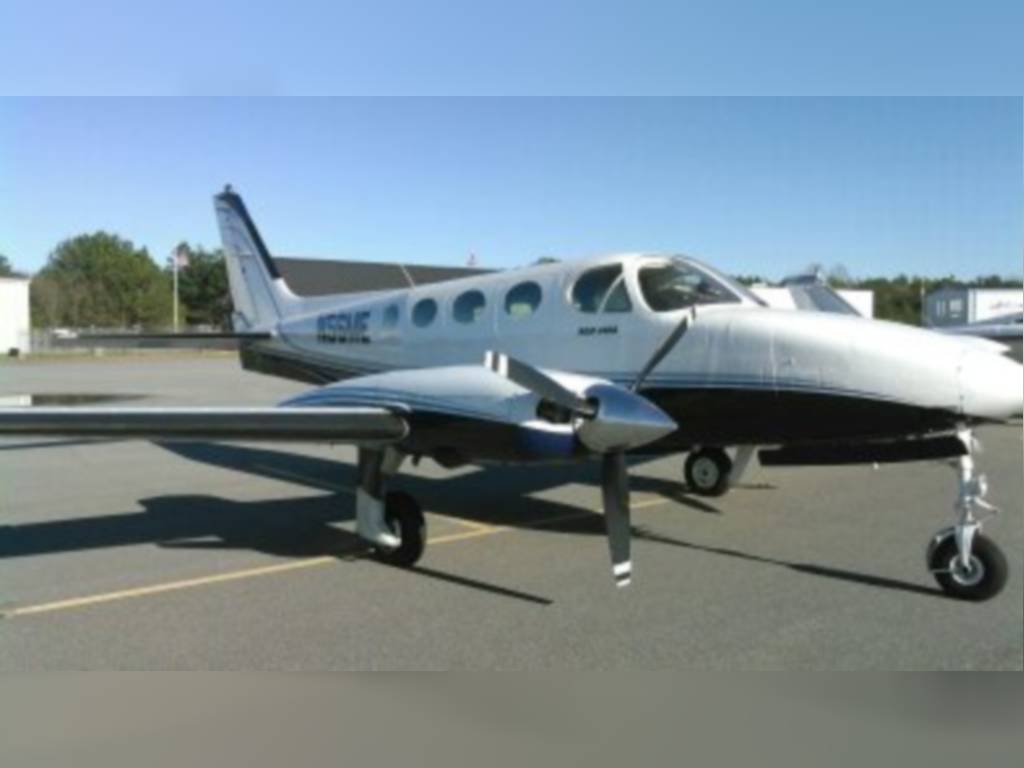
1977 Cessna
Closes Fri, Jan 1 · 2:00 PM CST
Fixed close. No extensions. Bids rise in $100 steps.
Bids are binding. Reserve status updates as bids arrive. See Bidder Terms.
Offers are accepted prior to the opening bid. Once bidding starts, bid from the console above.
Equipment Specifications Lot 468
- Model year
- 1977
- Manufacturer
- Cessna
- Model
- Not specified
- Reported condition
- Good
- Category
- Aircraft
- Lot number
- 468
Seller Description & Notes
This airplane regularly flies. It's ready to fly for the buyer. It has flown all over this nation, Europe, and the Bahamas. It's easy to fly and has a long range and is comfortable. It's autopilot and WAAS navigators make trips easy. The dual GNS530Ws present navigation, traffic, weather, lightning, flight plan, airport and ATC data readily. RNAV, ILS, and VOR navigation are all available. The RAM III engines provide great climb performance even on a single engine. The altitude capability makes topping weather a reality. The retractible landing lights and taxi light provide great landing illumination at night. The taxi light directs its beam in the direction of the turn. The nacelle tank pumps directly supply fuel to the main (tip) tanks once the main tank levels decrease by 20 gallons. The auxiliary (wing) tanks when selected directly feed the association engine and that engine's excess fuel flow and vent flow to the associated main tank. When the auxiliary tank is emptied or when a descent is to be initiated the remaining flight is conducted with fuel from the main tanks. The multiple tanks and the tank operating methodology make payload planning easy and flexible. Descent from high altitude is as simple as pitching down and allowing the speed to increase. leveling off at the desired altitude and a small power reduction will slow the 340A to 15 degree flap and landing light deployment speed. Once the flaps are deployed the airplane will slow to gear extension speed and will allow further flap deployment. The flaps are split design and are not visible from the cockpit. The first 15 degrees give added lift useful for high, hot, and short takeoffs as well as initial slowdown. The remaining flap deployment is all drag useful for stablizing the approach to 105kts. The approach is pitch to glidepath and power adjust to descent rate. There is plenty of areas for baggage storage: the nose, the wings, the aft cabin, and any place in the cabin. Of course only in the cabin is the baggage in a pressurized and temperature controlled environment. It is difficult to load the 340A outside the W&B envelope limits if the Max Gross Weight is not exceeded. Taxiing is by rudder pedals although if the airplane is turned with asymmetric power or with a tug the nose wheel will caster. The weight is shared approximately equally on all three wheel, so loading the airplane can be done in any order. This airplane can support a wide range of missions.
Bidding Ledger
1 bid(s) placed- Leading You Auto